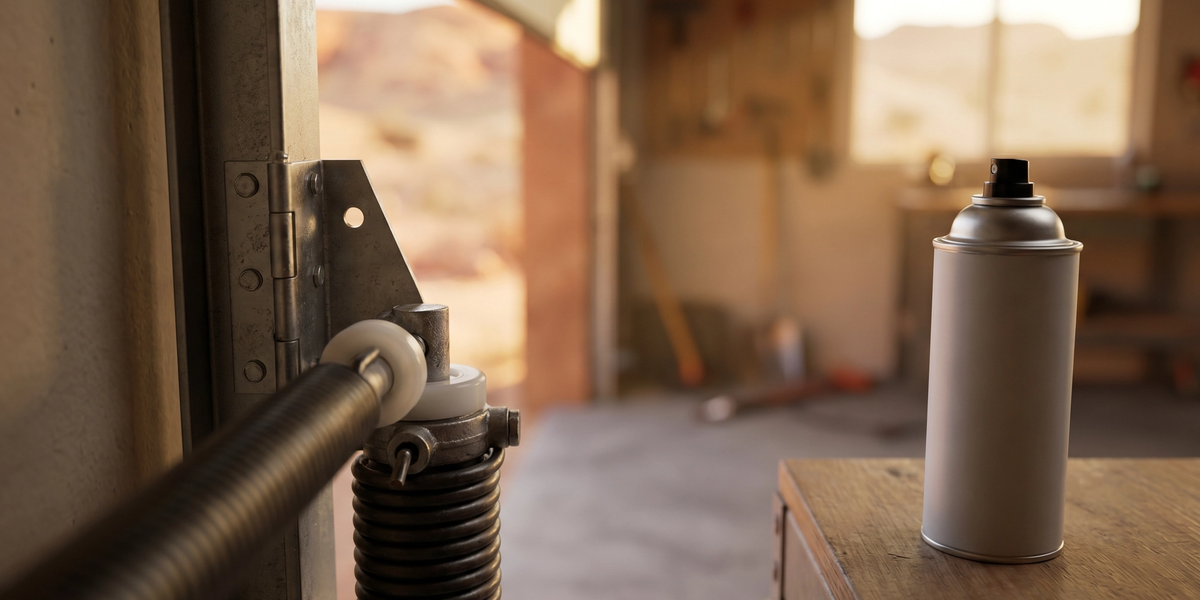
WD-40 is one of those household products that seems to fix everything. From squeaky hinges to stuck zippers and rusty bike chains, it is the go-to solution for a lot of quick problems.
But your garage door is one place where WD-40 can actually create bigger issues.
If your door is squeaking, grinding, or just sounding off, it is tempting to grab that blue can and spray away. The problem is that WD-40 is not a true long-lasting lubricant for garage door systems. It can attract dirt, wear out parts faster, and may even affect certain finishes or materials.
What WD-40 Is Actually Made For
WD-40 stands for “water displacement.” The “40” refers to the 40th formula tried by the chemist who developed it.
It is a penetrating product designed to:
- Displace moisture
- Loosen stuck parts
- Help protect against rust and corrosion
WD-40 can be useful for tools, stuck bolts, and certain metal parts in storage. But a garage door is a moving system that cycles up and down repeatedly. It needs a lubricant designed to stay in place and protect the parts through regular daily use.
Why WD-40 Is Not Ideal for Garage Doors
Garage doors have multiple moving parts that need consistent, long-lasting lubrication, including:
- Hinges
- Rollers
- Springs
- Bearings
- Locks
- Moving opener components
WD-40 can cause problems in a few ways.
It attracts dirt and dust.
Garage doors already deal with plenty of dust, grit, and debris, especially in Arizona. WD-40 can leave a residue that collects dirt and makes parts tacky over time. That buildup can increase friction instead of reducing it.
It can add strain to your opener.
When moving parts are not properly lubricated, your opener has to work harder. Extra strain can shorten the life of the opener and may lead to premature repairs.
It can affect certain materials.
Some garage door systems include rubber, plastic, or nylon components, including seals, rollers, and gaskets. WD-40 may soften or deteriorate certain materials over time, which can lead to cracking, swelling, or loss of shape.
It may affect some finishes.
On certain doors or powder-coated components, the wrong spray product can affect the finish. That is one more reason to use a garage-door-specific lubricant instead of a general-purpose spray.
It is usually a short-term fix.
WD-40 may quiet a squeak temporarily, but it does not provide the kind of lasting lubrication your garage door needs. If you keep reapplying it, you may also keep adding more residue and dust buildup.
What to Use Instead
Instead of WD-40, use a lubricant made for garage doors.
Good options include:
- Silicone-based garage door lubricant
- Garage-door-specific spray lubricant
- Manufacturer-recommended products, such as Clopay Pro Lube
These products are designed to provide longer-lasting lubrication without creating a sticky mess or attracting as much dust and grime.
Where to Apply Garage Door Lubricant
Apply a light, thin layer of lubricant to:
- Hinges
- Rollers
- Springs
- Bearings
- Locks
- Appropriate moving parts on the opener
Avoid spraying lubricant directly into the tracks. The tracks should stay clean and free of buildup so the rollers can move smoothly.
After lubricating, wipe away excess product with a clean cloth. More is not always better. A light application is usually enough.
How Often Should You Lubricate a Garage Door?
A good rule of thumb is every three to six months, or any time you notice the door getting louder than usual.
You should also:
- Keep the tracks clean and free of obstructions
- Listen for new grinding, popping, or scraping sounds
- Watch for jerky or uneven movement
- Have the door balance checked if the opener seems strained
Signs Your Garage Door May Need Maintenance
A noisy garage door is often the first sign that something needs attention.
Common warning signs include:
- Loud squeaking, grinding, or popping noises
- Vibration or shaking while the door moves
- Jerky or uneven movement
- Sagging to one side
- A door that will not open or close fully
- An opener that sounds like it is working harder than normal
Routine maintenance can help prevent bigger problems. A qualified technician can inspect the door balance, lubricate moving parts properly, check springs and cables, tighten loose hardware, and replace worn components before they turn into major repairs.
The Bottom Line
WD-40 is handy to have around, but it is not the right choice for your garage door.
If your door is noisy, skip the WD-40 and use a silicone-based or garage-door-specific lubricant instead. And if the door is still squeaking, grinding, shaking, or struggling after lubrication, it may be time for a professional inspection.
Ready to schedule maintenance?
If your garage door is noisy, struggling, or overdue for a tune-up, Shaver’s Garage Doors can help.
Call: 928-453-1764 Email: service@shaversdoors.com Visit: https://www.shaversgaragedoors.com
Ready to Get Started?
Contact us today for a free consultation and estimate. Our friendly team is here to help you every step of the way.