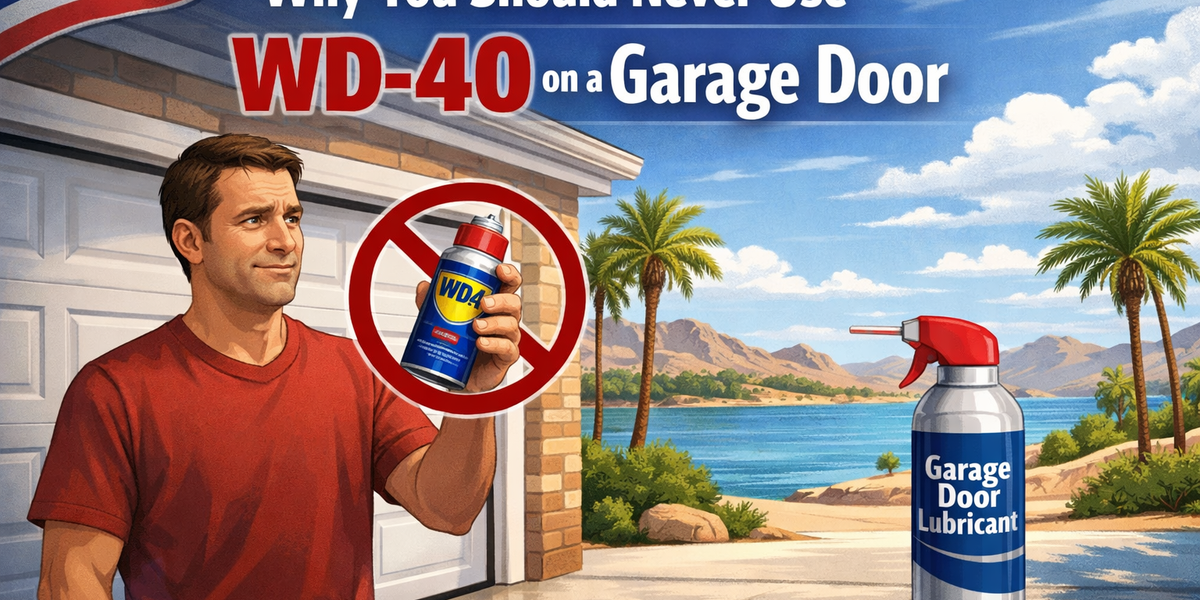
Why You Should Never Use WD-40 on a Garage Door
WD-40 is one of those household products that seems to fix everything. From squeaky hinges to stuck zippers and rusty bike chains, its the go-to solution for a lot of quick problems.
But your garage door is one place where WD-40 can actually create bigger issues.
If your door is squeaking, grinding, or just sounding off, its tempting to grab that blue can and spray away. The problem is that WD-40 isnt a true long-lasting lubricant for garage door systemsand it can attract dirt, wear out parts faster, and even damage finishes.
The Composition of WD-40
WD-40 stands for water displacement. The 40 refers to the 40th formula tried by the chemist who developed it.
Its a penetrating oil designed to:
Displace moisture
Loosen stuck parts
Help protect against rust and corrosion
Its made from chemical ingredients including petroleum-based oil and aliphatic hydrocarbons.
WD-40 is great at breaking through rust bonds and leaving a thin protective filmwhich is why its useful for tools and parts in storage. But its not designed to provide the kind of durable lubrication your garage door needs for repeated daily cycles.
Why WD-40 Is Not Suitable for Garage Doors
Garage doors have multiple moving parts that need consistent, long-lasting lubrication:
Hinges
Rollers
Springs
Bearings
Locks and moving opener components
WD-40 can cause problems in a few ways:
It attracts dirt and dust. That buildup can make tracks and components tacky, increasing friction.
It can add strain to your opener. More friction means your opener works harder, which can shorten its lifespan and lead to premature failure.
It can affect certain materials. WD-40 can soften or deteriorate rubber, plastic, and nylon parts (like some rollers, seals, and gaskets), which can lead to cracking or loss of shape.
It may damage the finish. It can harm powder coat finishes on some doors.
Its a short-term fix. It may quiet a squeak temporarily, but it doesnt provide lasting lubricationso youll be reapplying often (and collecting more dust each time).
Recommended Alternatives to WD-40
Instead of WD-40, use a lubricant made for garage doors.
Good options include:
Silicone-based lubricants
Garage-door-specific lubricants (for example, Clopay Pro Lube)
These are designed to:
Provide longer-lasting lubrication
Avoid sticky residue
Reduce dust and grime buildup
Protect components without harming finishes
Where to apply lubricant
Apply a light, thin layer to:
Hinges
Rollers (avoid getting lubricant on the track itself)
Springs
Bearings
Locks
Any moving parts on the opener (as appropriate)
After applying, wipe away excess with a clean cloth.
How often to lubricate
A good rule of thumb is every three to six months, or anytime you notice the door getting noisier than usual.
Also:
Keep tracks clean and free of obstructions
Check door balance periodically (an unbalanced door strains the opener)
Do You Need Garage Door Maintenance Now?
Some signs your garage door may need maintenance include:
Loud squeaking, grinding, or popping noises
Vibration or shaking while the door moves
Jerky or uneven movement
Sagging to one side
The door wont open or close fully
Regular maintenance and periodic inspections from a qualified technician can prevent bigger problems. A technician can:
Inspect door balance and make adjustments
Lubricate moving parts properly
Check springs and cables for wear
Tighten loose bolts and screws
Replace worn or damaged components
With routine service, you can extend the life of your garage door and opener, reduce breakdowns, and keep everything running safely.
WD-40 is handy to have aroundbut its not the right choice for your garage door. If your door is noisy, skip the WD-40 and use a silicone-based or garage-door-specific lubricant instead.
Ready to schedule maintenance?
If your garage door is noisy, struggling, or overdue for a tune-up, were here to help.
Call: 928-453-1764
Email: service@shaversdoors.com
Ready to Get Started?
Contact us today for a free consultation and estimate. Our friendly team is here to help you every step of the way.