When your garage door starts acting up, it is more than annoying. It can also be a safety concern.
One of the most frustrating problems homeowners run into is when the garage door closes, touches the floor, and then immediately reverses back up.
It can feel mysterious, but this behavior is usually connected to your opener’s built-in safety systems. The good news is that many causes are simple to identify. The important part is knowing when it is a quick check and when it is time to call a professional.
Why This Happens
Modern garage door openers are designed to reverse if they sense an obstruction or unusual resistance. That is intentional. It helps prevent injuries, damage to vehicles, and items from getting pinched under the door.
If your door reverses as soon as it hits the floor, the opener is essentially saying:
“Something does not feel right, so I am backing up.”
That response can be triggered by sensors, opener settings, resistance near the floor, door balance issues, worn parts, or track problems.
Common Reasons a Garage Door Reverses
1. The safety sensors are misaligned or blocked
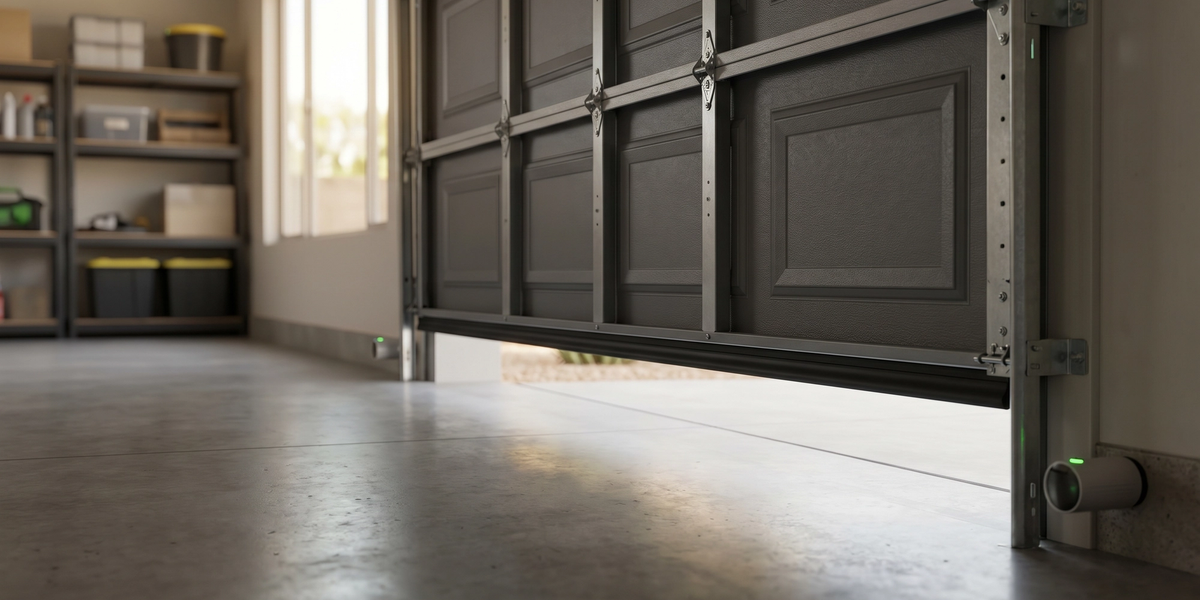
The most common cause is the safety sensor system. These are the small devices mounted near the floor on each side of your garage opening.
Think of them as your garage door’s eyes. When something breaks the invisible beam between them, the opener tells the door to reverse.
What can go wrong:
- One sensor gets bumped and is no longer aimed correctly
- Dust, cobwebs, or mud blocks the sensor lens
- A storage item, trash can, or tool is interrupting the beam
- The bottom door seal briefly crosses the sensor path
- Direct sunlight interferes with the sensor signal
What you can try:
- Make sure both sensors are facing each other
- Check that the indicator lights look normal
- Gently wipe the sensor lenses with a soft cloth
- Move anything near the bottom of the opening
- Try closing the door again
If the door works after cleaning or realigning the sensors, that may have been the issue. If it keeps reversing, keep troubleshooting.
2. The force or travel settings are incorrect
Your garage door opener needs to know two important things:
- How far the door should travel to fully close
- How much resistance is too much before it should reverse
If these settings are off, the opener may think the door has hit an obstruction even when it is simply touching the floor.
Common signs:
- The door closes almost all the way, touches the floor, then pops back up
- The door stops short and reverses
- The problem started after opener work, power interruption, or door adjustment
Because force and travel settings vary by opener model, it is best to reference the opener manual or have a technician handle the adjustment if you are unsure.
3. Something is causing resistance at the bottom
If the door meets resistance right at the floor, the opener may interpret that as an obstruction.
Possible causes include:
- Rocks, dirt, or debris in the track corners
- A damaged or swollen bottom seal
- Uneven concrete
- A raised spot in the garage floor or driveway
- Track alignment issues
What you can try:
- Clear the doorway and track corners
- Look for debris near the floor
- Check the bottom seal for tearing, swelling, or binding
- Watch whether one side of the door hits the floor before the other
If one side appears to bind, drag, or hit unevenly, stop forcing the door and schedule service.
4. The door is out of balance
A garage door should be properly balanced so the opener does not have to carry the full weight of the door. If springs are worn or failing, the door may become too heavy or may not move smoothly.
That extra strain can trigger a reversal.
Warning signs include:
- The door feels unusually heavy to lift manually
- The door moves in a jerky or uneven way
- You hear loud popping or banging noises
- The door will not stay around the halfway point when disconnected from the opener
- The opener sounds strained
Important: Do not attempt to adjust or repair garage door springs yourself. Springs are under high tension and can be dangerous.
5. Rollers, hinges, or tracks are worn
Worn rollers, bent hinges, or slightly warped tracks can create just enough resistance to trigger the safety reverse.
Look and listen for:
- Grinding noises
- Squeaking that keeps coming back
- Wobbling as the door moves
- Visible wear on rollers or hinges
- Gaps, bends, or rubbing along the track
These issues often start small, but they can lead to bigger repairs if ignored.
Quick Troubleshooting Checklist
If your garage door reverses when it hits the floor, start with these safe checks:
- Clear the doorway and track corners.
- Check and clean the safety sensors.
- Make sure nothing is blocking the sensor beam.
- Look for damage to the bottom seal.
- Listen for grinding, popping, or screeching sounds.
- Watch whether the door moves evenly.
- If the issue continues, stop forcing it and schedule service.
Forcing the opener to close a door that keeps reversing can damage the opener, the door, or the safety system.
When to Call a Professional
Call a technician if:
- The door reverses repeatedly after cleaning the sensors
- The door feels heavy or looks unbalanced
- You suspect a spring, cable, roller, or track issue
- The opener settings need adjustment and you are not confident doing it
- The door will not close reliably
- You hear loud popping, grinding, or banging sounds
Getting the problem fixed quickly protects your opener, prevents damage to the door, and keeps the safety system working the way it should.
Need Help Getting Your Door to Stay Closed?
If your garage door reverses as soon as it hits the floor, Shaver’s Garage Doors can diagnose the cause and get it working safely again.
Call: 928-453-1764 Email: service@shaversdoors.com Visit: https://www.shaversgaragedoors.com
Ready to Get Started?
Contact us today for a free consultation and estimate. Our friendly team is here to help you every step of the way.